
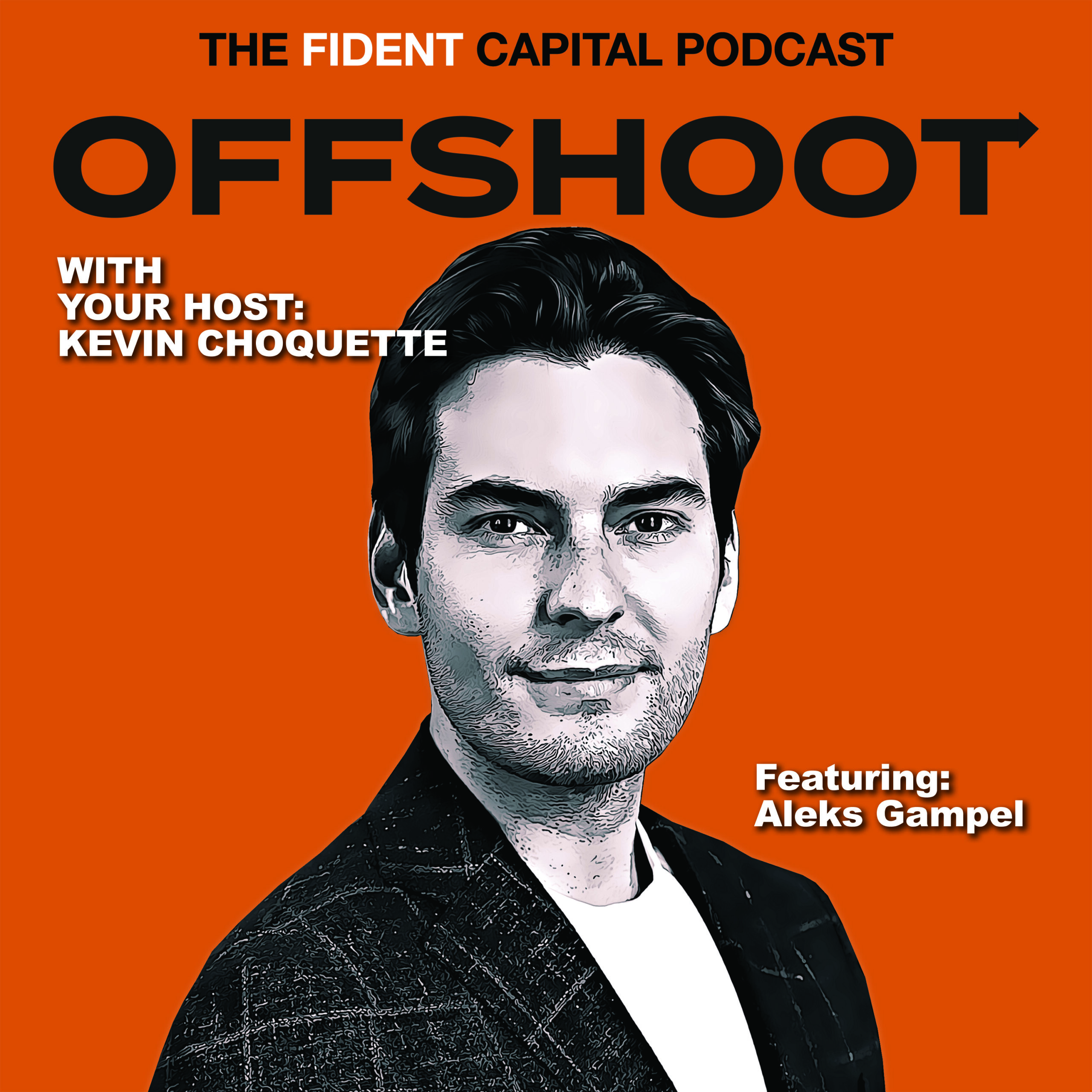
Aleks Gampel has executed over $2B in real estate transactions and held leadership roles in venture-backed companies, putting him at an unusual intersection of real estate, capital markets, and technology. On his own projects, he kept hitting the same wall: not enough skilled labor to build them. He looked at every industrialized construction option on the market, from modular to volumetric to kit of parts to gigafactories, and concluded none of it actually worked. Then he met Oleg, who had an independent thesis that the only way to scale industrialized construction was to localize the manufacturing. Five years and a million engineering hours later, they’ve built Cuby Technologies into a 243-person company across three continents with their first U.S. mobile micro factories deploying to Nevada and New Mexico.
Instead of building a giant centralized factory, Cuby’s product is a mobile micro factory: a containerized, plug-and-play factory in a box that ships anywhere in the world and sets up near the target market in about 100 days. From there, four unskilled workers on two shifts use software-driven assembly to build a 2,000 square foot single-family home in 30 days at roughly $100 a square foot. The whole system sits inside existing rails: international building code, conventional construction draw schedules, non-proprietary materials. Aleks isn’t trying to reinvent the wheel. He’s just trying to make it spin faster.
What makes this compelling is how Cuby has solved for the capital stack as carefully as the product itself. Each factory is roughly $25 million all-in, with a target of 40%+ unlevered IRR and capacity for 200 homes a year inside a 185-mile radius. Venture capital funds the platform; each individual factory is financed as its own SPV using structured equity, infrastructure debt, and anchor offtake commitments from regional home builders who get a slice of factory economics in exchange for front-loading demand. The conversation reveals why labor, not regulation, is the real bottleneck on housing supply, why 40% of America’s construction labor force retiring in the next 10 years creates tailwinds for this approach, and why Aleks is drawn to problems nobody has cracked. He’s five years into something that sits at the base of Maslow’s hierarchy, and he’s just getting to scale.
Transcript
[00:00] Aleks Gampel: Look, it’s fun to solve really, really hard things.
[00:03] No one solved this. I think there’s a bit of this like explorer mode, right? Feeling like Columbus in some capacity. I think we want to crack this. No one’s cracked that.
[00:13] A lot of folks have failed. A lot of folks have tried.
[00:25] Announcer: Welcome to Offshoot, the Fight in Capital podcast with host Kevin Choquette.
[00:30] Offshoot is a cur curiosity driven conversation that features a wide range of real estate business professionals.
[00:37] In each episode we unpack the knowledge, vantage point and domain expertise of our guests.
[00:42] Then we move beyond the facts and figures and dive into the personal habits and mindset which allow them to be high performers in their respective field.
[00:51] This podcast’s objective is simple supporting entrepreneurs, fostering relationships, and uncovering meaningful conversations that positively impact business foreign.
[01:11] Kevin Choquette: Welcome everyone to episode 36 of Offshoot. My guest today is Alex Gamble, co founder of Qubii, a hardware and software company that’s built a completely new type of home construction.
[01:24] Cubi’s product is a mobile microfactory,
[01:27] a containerized plug and play factory in a box that ships anywhere in the world and sets up near the target market in about a hundred days.
[01:37] From there they manufacture and assemble single family homes with unskilled labor at roughly $100 a square foot in 30 to 60 days.
[01:47] There are 243 people across three continents,
[01:51] a million engineering hours into the endeavor and have their first mobile micro factories headed to Nevada and New Mexico.
[02:00] Before qb, Alex was a real estate guy. He was doing development and couldn’t find skilled labor for his own projects.
[02:07] He looked at the industrialized construction options out there and concluded that none of it actually works.
[02:13] They were too expensive,
[02:15] not customizable enough, regulatory nightmares or unruly logistics problems.
[02:21] Then he met his co founder Oleg, who had an independent thesis that the only way to make industrialized construction scale was to localize the manufacturing.
[02:32] Five years later they’ve built the infrastructure to copy paste mobile microfactories by the dozens serving regional home builders who desperately need help competing with The Lennars and Dr. Hortons in the world.
[02:47] What’s most compelling about this conversation is how QB is taking on the housing problem through the lens of logistics while respecting the biases associated with the current home building processes and its financing.
[03:01] This is the better mouse chat play.
[03:03] What’s also unique is that QB’s walking in both venture and real estate private equity worlds VC to fund the platform and get to market private equity to fund project level endeavors.
[03:15] It’s tough to fully unpack what QB is doing without visuals, but I think you’ll walk away from this thinking about home construction in a very different way.
[03:23] If you want some visuals as you dive into this, go to qbtechnologies.com it’s C U-B Y qbtechnologies.com listen in as we cover topics that include how regulation Alex mentions 26,000 local zoning codes and labor shortages are the two impediments to building more homes.
[03:45] Why construction is fundamentally a logistics problem and why putting things into a $250 million factory doesn’t solve that.
[03:55] How Cubi’s mobile microfactory works 168 shipping containers,
[04:00] 600 SKUs six and a half acre site and a just in time delivery system where four unskilled workers on two shifts using their phones can build a 2,000 square foot home in 30 to 60 days.
[04:15] How Cubi serves local developers as both a manufacturer and a gc,
[04:21] taking the lot from finished pad to a completed home why QB chooses to manufacture their own windows, framing and sandwich panels and how eliminating layers of margin on products like triple pane windows creates speed,
[04:37] cost and quality advantages.
[04:39] How their system sits on international building codes, works with conventional construction lenders and makes construction draws on a standard schedule.
[04:49] How they manufacture homes for $100 a square foot and how that informs the price at which the homes will be delivered to the site.
[04:56] The economics of a mobile microfactory it’s roughly $25 million all in and they’re targeting 40% unlevered IRRs for those installations where they’ll have the capacity to deliver 200 homes per year serving 185 mile radius.
[05:14] Why venture investors are excited about hard assets and deep tech right now and how the Capex super cycle is creating tailwinds for companies solving real world problems and finally, why solving for housing sits at the base of Maslow’s hierarchy and what keeps Alex motivated to crack a problem that nobody else has solved.
[05:34] There’s a ton of innovation and thought provoking ideas here for builders, developers and investors who are thinking about the future of construction. I hope you enjoyed it.
[05:47] Alex,
[05:48] welcome to the podcast.
[05:51] Aleks Gampel: Thanks for having me. I’ve listened to the last couple. I’m excited to be on here. Thanks Kevin.
[05:57] Kevin Choquette: Yeah, thank you. I appreciate it. I know you’re busy and out raising capital and doing a bunch of interesting stuff which we’ll get into. I should have asked you this before,
[06:05] Aleks Gampel: but Cubi or Cubby? It’s QB because we our system is based on basically a grid so cube
[06:15] Kevin Choquette: but doesn’t matter Q works so tell us about Qubi, I’ve done a fair bit of diligence, but the listeners don’t have the benefit of that. So tell us about Qubie and what you guys are up to.
[06:27] Aleks Gampel: Yeah, for sure.
[06:28] We’re a hardware software business.
[06:32] We play in the construction ecosystem. Very much something your listeners deal with.
[06:38] We’re just there to exist to improve processes in the construction ecosystem. That’s really what we do.
[06:45] Construction is antiquated in many ways, and skilled labor is very much in shortage. We’re trying to find ways where we can essentially build without skilled labor and reduce labor hours altogether because labor is the most expensive piece of in the cogs when it comes to building something.
[07:04] So we’re solving for the labor piece through hardware and software.
[07:08] Kevin Choquette: And so what’s that look like? I mean, I think I’ve got a good sense of it, but you guys are,
[07:13] you are like a modular manufacturer or you’re, you’re building like.
[07:20] Aleks Gampel: Yeah, so I can take you through the whole story. So I think there’s really two reasons why we’re not building enough in America. It doesn’t matter whether it’s data centers or housing.
[07:29] There’s really two big reasons to us why there’s not enough building happening or why building is so expensive.
[07:36] One, there’s a regulatory problem. You probably know this all too well, but between a developer buying a piece of land and being able to put a shovel in the ground, there’s a lot of red tape in between.
[07:46] I don’t think we ever solve the regulation piece. You know, Elon Musk, they can all try.
[07:52] Trump can try. Just. There’s 26,000 different zoning codes.
[07:56] Unfortunately, real estate happens at a super local level.
[08:00] So I don’t think regulation is something we ever solve. So that’s not an area we’re playing in,
[08:05] and I’ll speak about that further.
[08:07] The second reason why we’re not building enough is there’s simply not enough skilled labor out there. I don’t know how often you make your way out to a construction site, but lots of gray hair, lots of gray beards.
[08:17] Statistically, 40% of our construction labor force is due to retire in the next 10 years.
[08:23] So not only are we missing millions of homes, which is, you know, a headline and,
[08:27] and topic of conversation for every politician these days,
[08:30] you know, the housing crisis, but we don’t have enough folks to physically build the housing or the infrastructure that we need out there.
[08:39] Labor, even though it’s, and partly because of it’s literally missing,
[08:46] it’s expensive when it comes to,
[08:48] to the construction industry. So if you take mass manufactured products like electronics or cars, labor is, you know, say 5 to 10% of the COGS. If you take construction and you take a hard cost budget, most of those hard costs are anchored by labor.
[09:06] Labor being, you know, 50 to 70% of those COGS relative to that 5 to 10 in other industries.
[09:12] So in order for us to be able to build more, to be able to build more efficiently,
[09:17] to build cheaper, better, faster, et cetera,
[09:19] we need to be able to solve for the labor piece. How do you build more homes or things with fewer hands? How do you do it better? How do you do it faster?
[09:28] How do you do it for less?
[09:30] The obvious answer, or seemingly so, has been the idea of, hey, let’s go make buildings in factories the same way that everything else is made from the T shirt that you’re wearing to the headphones that are recording this conversation,
[09:42] let’s go do it out of factories. Unfortunately, when we think about construction, we think about it as one giant logistics problem.
[09:51] And it’s really funny to say that, but that’s really what it is. It’s getting the right materials and the right people in the right place at the right time.
[09:58] Just because you put something in a $250 million factory and decide to make volumetric boxes or a kit of parts or anything in between,
[10:07] doesn’t mean you solved that logistics problem of again, getting the right materials and the right people to the right place in the right time.
[10:14] So what we did, and we call it almost an antithesis to what has existed to date, which is modular. Think volumetric. Modular or volumetric boxes that get stacked on top, made off site, or a kit of parts.
[10:27] We basically said we’re not any of that. What we have to do first is we have to come up with a way to fix the logistics problem.
[10:34] So we invented a new type of manufacturing where our product is a mobile microfactory. So it’s a completely containerized factory in a box that we send anywhere in the world and erect near site in a really quick time span for very little capex.
[10:51] And that allows us to solve for much of the logistics problem by doing one. Mobile microfactory is cute. It doesn’t capture a large share of the market for us, the market being 60,000 homes a year out of the million that get built.
[11:06] So we had to figure out a way how to mass produce factories. So we came up with infrastructure to be able to copy and paste mobile microfactories by the dozens on any given year.
[11:17] And then we built our Kit of parts, and then we built a software that unifies it all. But maybe the TLDR is.
[11:24] If you think about Home Depot and Lowe’s, there’s thousands of locations.
[11:29] There’s thousands of locations.
[11:31] And effectively, with thousands of locations,
[11:33] there’s not just one centralized Home Depot in Texas that services all of the U.S.
[11:39] so we said we’re going to do that exact thing, but via manufacturing,
[11:43] and we’re going to effectively also be the general contractor and the manufacturer. So imagine Home Depot made all its own stuff and installed all its own stuff. That’s what we do.
[11:53] Kevin Choquette: Yeah, I get it. That’s a.
[11:55] Aleks Gampel: But.
[11:55] Kevin Choquette: Okay, so. So talk to me about the kit of parts and removing skilled labor. I agree with you. I’m. I don’t spend a lot of time on construction sites, but I have buddies who are general contractors, and they’re all pulling their hair out about how difficult the business is now because you can’t find trades.
[12:11] And the trades are the ones that are sort of driving pricing.
[12:14] Um,
[12:15] so I would agree. When I am out there, I tend to see very few young people. But talk to me about the kit of parts and the software and how that’s removing that skilled labor part, because there’s a lot of craftsmanship.
[12:28] I mean, if it’s the tile guy, it’s the drywall guy, it’s the flooring guy, the cabinet guy, the countertop guy.
[12:34] Aleks Gampel: Yeah. There’s 23 subcontractors building a house. They’re all disjointed, fragmented, and disincentivized to make sure things move quickly on time and on budget. Right.
[12:44] Kevin Choquette: But they always finish their job perfectly before they hand it off to the next guy. Right.
[12:50] Aleks Gampel: Yes. They’re sarcasm, and that’s.
[12:54] I love seeing some of the YouTube videos and some of the social media of, you know, inspectors showing up and things are, you know,
[13:01] let’s just put it this way. The American consumer, because of the supply demand,
[13:05] doesn’t look behind walls, doesn’t inspect a house before they buy it. But, you know, I’d just like to point that likely most houses do not pass all the inspection stages perfectly.
[13:17] Kevin Choquette: Yeah, I’m certain of that. But so talk to me about the kit of parts and the software. I mean, how does that start to address this whole labor?
[13:25] Aleks Gampel: So for your audience to imagine, obviously, it’s very hard to visualize this without me pulling up my screen, but we quite literally send 168 containers to a market, let’s say to San Diego, somewhere on the outskirts.
[13:37] We put up that factory in about a hundred days,
[13:39] it’s containerized, It’s a factory in box, plug and play.
[13:43] Inside of this factory, we get to make and prepare all of the components that go into a single family home.
[13:50] Things that we make, for example, we take in raw inputs, things like a glass pane and we turn that into a window from scratch. So there’s things that quite literally we’re the producer, manufacturer of.
[14:02] There’s a reason why we chose to make certain things versus buy them off the shelf or from a third party. But there’s things that we make. Windows, framing elements, non structural sandwich panels for the envelope of the house, foundation systems, interior walls out of light gauge steel, OSB insulation,
[14:18] Sheetrock, etc.
[14:20] So there’s things that quite literally we make and then there’s things that we prepare. We don’t make kitchen cabinets, we don’t make doors, we don’t make hardware for the doors.
[14:28] So there’s things that we buy from third parties, but they still make their way through our mobile microfactory because we’re preparing them to arrive on site. So a good example of that is we’ll take an interior door, we’ll put it into a frame, we’ll add the hardware to it.
[14:43] So we’re removing any critical, call it dirty work on site and pushing that off last mile to our mobile microfactory. But what we’re doing, and because we’re proximate and logistically a last mile solution, we get to make those parts just in time.
[15:00] So for us, a house is 37 stages of a build.
[15:03] Those stages have tasks, subtasks, et cetera. So think of them as process mapping the entire build.
[15:11] We make those stages and we’re always delivering those stages just in time to the construction site.
[15:19] Stages are correlated to the kit of parts. And essentially on site we’re assembling like any traditional house would say that Lennar would assemble. We’re assembling the house on site in, you know, from foundation to framing to rough ins to mep, et cetera,
[15:37] all the way to finishes.
[15:39] So in stages, we’re building the house on site. The way we use unskilled labor is because we’ve broken up the system into such minute tasks, we can orchestrate all that with software.
[15:50] So we have four folks on site, unskilled in two shifts, building an entire 2,000 square foot house in about 30 days for about a hundred dollars a foot.
[16:00] Kevin Choquette: Four people in two shifts. That’s what I just want to make sure.
[16:03] Aleks Gampel: Shifts over the course of about 30 days, putting together the kit of parts on site. Okay,
[16:09] they’re all unskilled, they have phones. They follow an orchestrated process on the software. Basically the software spitting out tasks and showing tasks saying grab. We also deliver all the tools and equipment on site.
[16:20] So we bring these 20 foot shipping containers, they have bathroom, showers, lockers, all the equipment and tools necessary to assemble the kit of parts. So software is effectively dictating what to do to that unskilled labor.
[16:33] It’s saying Bob smith, grab tool 16A and put together stage 23B like this.
[16:40] Kevin Choquette: So it’s highly.
[16:41] Aleks Gampel: The best example to give is maybe ikea.
[16:43] Except what we’ve done is much more complicated because when, when, you know,
[16:49] when Kevin buys in a table from Ikea, that table is a fixed table that you’re putting together. Now imagine that tape table got to shapeshift into different sizes, layouts, finishes, and the instructions needed to shapeshift to match that.
[17:02] And the orchestration of instructions needed to change as well. So that’s the complexity of what we’ve solved.
[17:08] Kevin Choquette: It sounds complicated.
[17:11] Aleks Gampel: There’s a lot of orchestration that needs to happen. But you know, they always say the,
[17:15] the best engineered things are actually incredibly simple and intuitive.
[17:19] You just don’t see the back end.
[17:22] Kevin Choquette: So, so take me. I mean, I didn’t realize you guys were making your own.
[17:26] And we, we can go at whatever level here is appropriate.
[17:31] But for example, I didn’t realize you were building your own windows. So maybe if that’s a good skew to kind of drill down on, you’ve got just panes of glass coming in that are the exact size you need or you’re going to cut the glass and okay, it’s the right size glass at the right time.
[17:48] Aleks Gampel: Yeah, we have a glass pane in standard size coming in. It’s one sku. We cut it ourselves, we triple painted ourselves, we add plastic molding to the window ourselves.
[17:58] So there’s, there’s entire stations that make products including like a form of a sandwich panel that we make that’s out of steel and EPS or pier depending on the market.
[18:11] Why did we choose to make things ourselves? Because A it was cheaper, B supply chain was just incredibly frustrating and C, because we could.
[18:22] So you know, if you try to go get a triple pane custom window right now, you’re going to be weeks on end backorder. No one would even answer your, your
[18:29] Kevin Choquette: car with massive margins. I mean windows are one of those things. It’s like, well, you could buy a used Mercedes or you could buy this window.
[18:36] Aleks Gampel: So windows are an Interesting one. So we call it a high margin loss product, right? In the sense that there’s so many hands that touch from like the raw input to Anderson Windows all the way to it being installed.
[18:49] There’s just so many layers of margin grabbing that if you eliminate those, you get to do something that’s higher quality and more efficient.
[18:59] Kevin Choquette: I think I know the answer to this, but I’ll ask it for the, for the listener. Cause I can hear like in my mind the, the old builder developer,
[19:08] or maybe let’s not say old seasoned. Been. Been doing this for a long time. Nowhere near their first radio hearing, if you will.
[19:17] A little editorializing here.
[19:19] Kind of, you know, high tech guy coming with a new way and system and you know, like, have you done this? Do you have a prototype? Like, is this, Is this all concept or it’s on the ground and like we’re doing.
[19:36] Aleks Gampel: Yes.
[19:37] Sorry, I didn’t,
[19:39] I didn’t exactly introduce where we are, but we’ve been building this for five years. We’re about a million engineering hours into this. That’s quite a lot of DE risking. We’re 243 people across three continents.
[19:51] We have a massive R and D center. We have a first mobile microfactory built.
[19:56] We have a papa factory in China where we get to mass produce our mobile microfactories. We own that.
[20:03] And we’re putting our first stakes in the ground in the US later in the fall.
[20:10] Our first mobile microfactories are headed to Nevada and New Mexico.
[20:13] That being said, we’ve built homes in Eastern Europe, in the US Et cetera. So none of this is in concept phase. We’re past that. We’re actively building homes.
[20:23] We know our numbers, we’re doing it with unskilled labor.
[20:27] So when it comes to conservative, I’d say two things. So you’re right. The industry is incredibly conservative. The reason why a lot of this is not scaled is A, because they didn’t build the business for scale.
[20:38] That’s partly what we’re solving. And B,
[20:40] because everyone was trying to reinvent the wheel. Problem of reinvent the reinventing the wheel is you basically become naive to the idea that, look, developers can be super progressive, but the answer to lenders, the answer to LPs,
[20:53] the answer to inspectors and regulatory bodies. We’re not trying to reinvent the wheel. In fact, we built a system that is completely in line and compliant with what’s done today.
[21:02] From lenders to inspectors.
[21:05] We’re just trying to make the wheel spin a little bit faster.
[21:09] So agreed with you that the industry is conservative. That’s why, you know, when we partner with regional home builders or folks to JBR Mobile microfactories with first thing we do is we build a house together.
[21:20] We have real things that we look at together.
[21:22] None of this is theoretical. We really just put our money where our mouth is.
[21:27] Kevin Choquette: So I’m just ask the obvious question and it’s sort of two parts, but the one is kind of, you know, how’s it going? As in if you’re currently in the market building homes and delivering them to the marketplace,
[21:41] how’s it going? And then part of two is like, what have you learned along the way? Because I have to imagine from inception or conceiving the idea to putting it in practice and watching how unskilled labor actually relates to what you put in front of them.
[21:57] There’s probably a lot, but maybe we start with how it’s going and then we can reverse engineer it to what you’ve learned along the way.
[22:04] Aleks Gampel: Yeah,
[22:05] you know, we learned a lot. That’s where a million engineering hours throw.
[22:10] We have a very specific thesis and our thesis is that homebuilding is an easy each head just there’s. There’s so many homes needed in the U.S. there’s such an undersupply.
[22:20] It’s very expensive. But by volume, by market, it’s the largest segment of real estate.
[22:28] The top 10 production homebuilders, think Dr. Horton Lennar, whatever, they’re very good. They build really cheap. We can argue the quality of product that they build, but that’s a whole different conversation.
[22:38] But they build cheap. What they’re really good at is buying 100 acre swaths of land and doing master plan communities and phases and basically using their purchasing power to go to a local GC and say look, I’m going to lock you in and give you work for the next three years.
[22:52] You’re going to make a 2% margin.
[22:55] They’re not very good at building five to three acres within a certain radius. In a disparate way, their model breaks.
[23:03] So for that reason, the other 50% of the US homebuilding market consists of regional homebuilders.
[23:08] They desperately need help competing with the Lennars of the world. That’s who we think we’re building infrastructure for or enabling to be more efficient.
[23:17] So when we localize an mmf, that’s generally who we’re servicing.
[23:22] Kevin Choquette: And is your vision that MMF is owned by a single regional developer or is it?
[23:27] Aleks Gampel: No, we own it. We’ll sometimes have co investors. We own it. We layer project finance on top of it. So look, our goal is to put up 275 mobile microfactories.
[23:37] So we’re inevitably going to be in most markets servicing 185 mile radius from the MMF. Right. So that we want to basically cover the map of the US when we enter a market, we.
[23:48] We generally are servicing that radius and either building for one or many home builders over the next several years in that market.
[23:55] Kevin Choquette: There you go. That’s interesting. One or many.
[23:59] Well, so I mean the question of how’s it, how’s it going?
[24:04] I still kind of just curious like when you bring the labor in and you’re like, okay, here’s your software.
[24:10] You know, go build a window. Like just boots on the ground. If you’re standing in the factory and you’re watching an unskilled laborer go, okay, I’m going to build a window.
[24:20] How’s that going? I’m just authentically curious as to like how successful that is. It seems challenging. Like from the outside. That seems like a heavy lift.
[24:29] Aleks Gampel: No,
[24:30] we’re doing it. We have a house in Michigan that’s, that’s nearly finished. It was built with four unskilled folks,
[24:36] one of them female on and basically from some horizontal all the way through vertical all the way to tco.
[24:44] So like we’re, we’re outdoing it.
[24:47] And the quality of that house is incredibly high. So the way we’re positioned from a product perspective is. Think that.
[24:54] I don’t know, Dr. Horton Home. Maybe we’re 10, 20% more expensive, but our quality is easily 2x trickle pane windows, steel superstructure, sandwich panels for the enclosure of the house that are our values in the 50s.
[25:08] Kevin Choquette: You said something that I didn’t realize before.
[25:10] Once it gets to this site and I also didn’t realize you guys own the factory and can work with multiple regional builders. But once it gets to the site, you’re saying that the manufacturing process.
[25:23] Let’s say for that regional builder. Developer. Maybe both. Maybe they’re a builder, maybe they’re just a developer.
[25:30] It’s very conventional. Like the trucks are coming up with parts and they know how to assemble it. It’s not a. Oh no, sorry.
[25:37] Aleks Gampel: Where. Let me be clear. Where the GC where all the 22 different saw.
[25:41] Kevin Choquette: You’re taking it to the. Yeah, you’re taking. Are they giving you a finished pad and that’s what you need to go
[25:46] Aleks Gampel: up or are you guys. They’re. They’re giving us a pad with infrastructure. We’re doing foundation all the way through tco. So.
[25:54] Kevin Choquette: Wow.
[25:55] Aleks Gampel: Maybe the, maybe the alternative way to think about us is we’re a GC that also happens to be a manufacturer and we have.
[26:02] Kevin Choquette: You said that too, but I missed it. Okay, so I’m a local or regional home builder. I’ve got a project,
[26:10] let’s just say Temecula, the southwest Riverside county,
[26:15] and it’s small. I’m going to do 16 homes on a,
[26:20] oh, say a three acre infill site.
[26:23] I’m going to get my, get my map, go through all the local,
[26:28] you know,
[26:29] headache to get a tentative map and a set of grading plans approved, record my final map and bond.
[26:37] I’ll do metal in the ground and whatever off sites I need to do.
[26:42] And then I’m calling you and say, okay, there’s the 616 pads.
[26:46] Aleks Gampel: I think that’s oversimplifying a bit because we’d likely get involved in some of the design phase. Right. Just because we’re able, we’re able to automate, you know, AOR and you know, AOE up to a certain point until a local person stamps it.
[27:01] Kevin Choquette: What’s AOR and aoe? Sorry.
[27:03] Aleks Gampel: We can do a lot of the architectural and engineering work on the, on the home itself just because it’s semi automated. And then you would still go and take that and stamp it with a local architect of record and local engineer of record.
[27:15] Kevin Choquette: Right. And get permits.
[27:16] Aleks Gampel: Once your permits are in place, we’d go into production.
[27:19] Kevin Choquette: Okay. Okay. And then at that point I’m, I’m sort of hands off. I’m paying you as a general contractor.
[27:27] Aleks Gampel: Yeah, we’re drawing down the same schedule. So most modular prefab gets stuck here because they don’t know how to work without charging up front.
[27:34] Lenders don’t work that way because we’re local and we’re just in time. Our draw schedule looks exactly the same, just accelerated. So, same lender.
[27:44] So we give you a gmp. You’re drawing, you know, we’re, we’re drawing on your draw schedule and producing the kit of parts in about 37 stages and installing as we go and call it 30 to 60 days, you know, the home is finished.
[27:59] Kevin Choquette: Man, this industry is so ripe for what you guys are talking about. The fact that it’s not site or off site built. Right. We’ve, we’ve gone down this rabbit hole several times.
[28:09] Aleks Gampel: That, that’s a, that’s a regulatory problem you’re about to bring up. That’s, it’s one of the reasons why no one scaled this space is because they’re all reinventing the wheel and waiting for regulation to change.
[28:19] We said, look, we’re going to do things within a certain parameter of what’s already allowed to be done. So for that reason, the way we even designed the kit of parts, we said, look, there’s certain things we can’t do.
[28:29] As much as we would love to, like we would love to put MEP behind the wall panel and deliver it like that. But then you run into this issue where someone says, well this is now modular, I gotta go inspect your factory.
[28:39] Or some inspector local. He’s still like, I don’t know what the hell I’m looking at.
[28:43] I’m not trying to lose my pension over this. Right.
[28:46] So the way we designed it, as we said, it’s going to be assembled on site and we can only innovate up to the point of IBC allowance. So our entire system sits on the rails of international building code,
[28:56] which is
[28:57] Kevin Choquette: generally more stringent than what is UBC or even or icc, whatever term you want to use.
[29:02] Aleks Gampel: But yes, our system is over engineered, but to a point where it’s recognizable.
[29:07] There are certain things we did not to be modular effectively. Maybe that’s another way of putting it.
[29:12] Kevin Choquette: Well,
[29:13] you got into like the modular inspection and getting the approval, you know, some from what can be like an international group.
[29:20] I was actually thinking about the financing which you touched on briefly.
[29:25] Aleks Gampel: Right.
[29:25] Kevin Choquette: If I go,
[29:26] hey, we’re going to do a modular build and if that manufacturer isn’t providing the financing to get the modules on site,
[29:34] then most construction lenders are not going to advance the funds to have inventory or chattel sitting in the factory.
[29:43] Exactly. Yeah. They’ll pay for it when it gets on site and it’s secured, which is the same model you guys are using.
[29:49] Aleks Gampel: Exactly.
[29:50] Because we’re last mile, we can afford. We, we can not like physically afford from a cost perspective, but we can afford to do that from a logistics perspective because we’re last mile.
[30:01] We make dispatched route deliveries every day and you know, during the week to different sites of those different stages.
[30:09] Kevin Choquette: So I want to go back to the logistics thing, which is I could make some comment about war and logistics, but why is it that it’s really
[30:18] Aleks Gampel: funny that you bring that up. Literally the thing that we quite, you know, often quote is that, you know, construction is like war. It’s one with logistics and process information or information systems.
[30:28] Kevin Choquette: Right.
[30:29] So how is it the fact that the MMF is fixed in place and you over time solidify your suppliers to Sort of synchronize with you. That eliminates some of those logistical challenges from the 23 disparate subs who are kind of picking it from different suppliers.
[30:50] And oh, I forgot something. Send that guy back to go get the like. Why is, why are you eliminating so much of the logistical noise by having a fixed MMF versus bringing everything to site with.
[31:03] With disparate subcontractors?
[31:07] Aleks Gampel: I know what you’re trying to ask, but I don’t think you’re phrasing it the right way. So.
[31:11] Yeah, so. So we feed our factory about 600 different SKUs, right.
[31:18] Different. Different bill of materials.
[31:22] Some of them end up being localized, some of them imported, but it’s always like a just in time system where think of them as printer cartridges. So imagine there’s a printer cartridge you’re using.
[31:33] You have one that’s, you know, next to the printer in case you run out. And then there’s one on the way of delivery from Amazon Prime. Right.
[31:41] Think of it as a system like that.
[31:43] So, you know, from a supply chain perspective, we have that covered.
[31:47] It’s very important that none of our materials are proprietary. In a worst case scenario, we can go to Home Depot. Most modular, most prefab is super proprietary. So there’s, you know, there’s no default vendors that you can go to.
[32:01] Yeah. Or redundancies. Exactly. It’s a better word.
[32:04] So that’s a.
[32:05] Then two.
[32:08] When you localize an mmf.
[32:10] Let’s actually take a different scenario. Let’s take a gigafactory approach.
[32:14] You made something and delivered it thousands of miles away. That means, you know, you can no longer be a GC for that project. You have some third party figuring it out.
[32:22] You know, they **** it up, excuse my French. And now you have another thousand miles in between. You think about what happens with us. A kit of parts arrives damaged.
[32:31] Great. That same day, we can produce it and send it to the site.
[32:36] Localizing solves everything, right? Materials, people, information in the right place at the right time.
[32:41] Kevin Choquette: Yeah, I think maybe the distinction, and I appreciate you calling out that my question might not have been well worded, is in fact that you have one system under one roof where if you.
[32:52] Aleks Gampel: Yes, we’re also ver. We’re vertically integrated. That’s exactly right. The only way to vertically integrate is to localize. Right.
[32:58] Kevin Choquette: And if you, you know, if you’ve been to your point, if you’ve been on a construction site or even people who’ve done a home renovation.
[33:05] Okay, well, we’re going to start Trade X on Friday.
[33:09] Oh,
[33:10] you know, trade precedent is still working. So we’ll be back in 10 days because we’re going to go back to the next job.
[33:17] And then that’s just the labor component of it. But then if they’re not on it, surprise, surprise. A lot of these subs aren’t with,
[33:26] with their materials, they can create their own delays.
[33:30] Aleks Gampel: Yes, that’s right.
[33:31] Kevin Choquette: Right.
[33:32] Aleks Gampel: So that’s why certain things we chose to make, by the way, those were consistently delayed to speed things up.
[33:39] Kevin Choquette: So, so opportunities and challenge just broadly like what are you guys seeing right now? What’s the world look like?
[33:46] Aleks Gampel: Yeah, we’re, we’re in an interesting inflection point. Like most of the risk is gone now we’re just commercializing. So our big next milestone is, you know, hopefully you can be a guest in New Mexico and touring a type of factory that’s only existed, you know, on paper, on IP filed at the patent office to now actually seeing this thing make stuff.
[34:07] So that’s going to be an exciting milestone.
[34:09] We already have a ton of inbound from regional home builders, developers, even folks that aren’t developers that are interested in backing the factories, like infrastructure groups. But you know,
[34:19] once that’s up, I think it moves from intangible to tangible and creates a lot more.
[34:25] Basically becomes a much easier pitch.
[34:29] Kevin Choquette: But look, you, you guys clearly have a vision here.
[34:34] You’re also venture backed. So what’s that process been of?
[34:39] There’s a couple things with venture. Right. One is getting them to see the vision. Maybe we’ll start there. Is, is it been a challenge to get somebody to kind of go, hey, I think, I think you’re right.
[34:49] I think your thesis is sound here. Here’s X millions.
[34:54] Aleks Gampel: So yeah, so we, we raised a decent chunk of capital, a lot less capital than most hardware companies or deep tech companies. We’ve been incredibly capital efficient, but in the early innings, it’s always hard to walk up to someone and say, look, I have nothing, but I think we can copy and paste hundreds of factories out of containers.
[35:12] Right.
[35:13] People laugh but then the more real it becomes, it gets easier. So like we’re raising a tranche of capital now. It’s a lot easier than it’s ever been.
[35:23] Venture is good for initial R D, but we’re quickly weaning off of that. These are real projects, real infrastructure for real cash flows. So we’re switching to a cost of capital that’s more consistent with infrastructure,
[35:35] you know, structured equity, debt, et cetera. Each one is a standalone spb that’s how we scale non dilutively.
[35:41] But yes, in the early innings, it’s obviously harder than it is now. Now that we have, you know, a pretty large team, lots of engineering work on the back end and these things actually standing.
[35:53] Yeah, like the, the positive tailwind. There’s really two from both sides. One is venture capital. And Silicon Valley is again excited about really hard problems being solved.
[36:02] Real world, real hard problems. So forget consumer software, all that jazz.
[36:07] Folks. Again, want to be building SpaceX type things and are excited to back them and the capital is available for that. And two from the other end,
[36:17] being a developer is hard things don’t pencil. You’re looking for more interesting, efficient, effective ways to generate margin.
[36:28] So you’re leaning into technology a lot more heavily.
[36:31] Kevin Choquette: Are you finding that shift like a read an article where it was hard assets, low obsolescence.
[36:37] Aleks Gampel: Right.
[36:37] Kevin Choquette: This halo play as opposed to playing in the world of BITS software?
[36:42] Aleks Gampel: Oh, totally. That’s been a tailwind that’s been ongoing for the last three years. It’s at its peak right now for sure.
[36:48] You can even see it in public policy. Right. Like Trump’s administration is very bullish on this Capex super cycle and it’s been incentivizing folks. And then you see it across Silicon Valley, you even see it upstream like the Apollos of the world and all the credit infrastructure stuff that’s happening around that.
[37:04] So, you know, it’s there.
[37:08] Kevin Choquette: I haven’t ever, I’ve done plenty of capital raising, but I’ve never done the venture side of things.
[37:15] Aleks Gampel: I’ve done plenty of, you know, real estate fundraising in my career as well. And this is a lot different.
[37:21] Kevin Choquette: Yeah, what’s that like? I mean, I’m not asking for you to reveal anything proprietary about your, your business or any of the deals you’ve got. I don’t think that’s appropriate, but just high level.
[37:31] Aleks Gampel: I mean very, very few fol had like a full career in real estate, but also a full career in like building operating businesses backed by venture. So I feel like I sit in a somewhat unique seat.
[37:40] Kevin Choquette: Absolutely.
[37:42] Aleks Gampel: Real estate is like, you know, it’s private equity, it’s how much have you de risk to make this a sound investment?
[37:47] Right.
[37:49] Whereas venture is slightly different. It’s can you prove that there’s truly unlimited upside here? Because to venture there’s a cap downside. It’s like, here’s my $5 million investment, but can that become a 50x?
[38:01] Right.
[38:02] So it’s like an inverse model and private equity, you know If I did 15 deals and one of them failed, that probably wouldn’t have a job. Whereas in Venture, 1 in 40 is supposed to be right.
[38:13] So it’s like it’s a.
[38:15] Just the mentality is very different.
[38:17] Kevin Choquette: Yeah, the, the risk is well understood and the fact that their bet could turn to a zero is understood. You’re just trying to,
[38:26] I guess, mitigate as much of the likelihood that that turns into a zero.
[38:32] Aleks Gampel: On the real estate side. Yes. I mean real estate also is, you know, like it’s, it’s proven right. Like it at this point it’s somewhat of a commodity and you know, before information used to be disparate.
[38:42] Now you have access to a ton of information.
[38:45] Almost like becoming like trading a stock at this point. But you know, you have asset classes, you have different buckets of capital, you have different risk profiles and it’s, you know, it’s.
[38:54] I don’t want to say easy, but it’s, you know, there’s precedent to it.
[38:59] Kevin Choquette: Right, but I was actually saying that the, Excuse me. The probability of a zero in venture capital might be a lot higher.
[39:05] Aleks Gampel: Right?
[39:06] Kevin Choquette: Like even.
[39:07] Aleks Gampel: Yeah, totally. That’s why folks like,
[39:10] like hardware a lot and deep tech. Because in ventured, like think about the amount of engineering you spend building that ip. So it’s tough for it to go to zero because it’s more tangible than software, which can be now wiped out with AI in a second.
[39:24] Kevin Choquette: Right.
[39:25] So like,
[39:26] you know,
[39:28] start with hey, we’ve got this idea, let’s go into the venture community and raise. And again, not, I’m not looking for specifics but generally like how shelled,
[39:40] how many.
[39:41] Aleks Gampel: It’s a numbers game. And at the earlier stages, which we’re not, we’re not at the early stages, but at the,
[39:46] at the early stages it is a simple numbers game.
[39:50] Kevin Choquette: You’re just speed dating.
[39:51] Aleks Gampel: Yeah, exactly. It’s a numbers game. Building relationships.
[39:56] Unfortunately, sometimes ventures is driven by, you know,
[40:00] hype, fomo, et cetera. So you have to start playing that game. That’s where real estate works a little differently.
[40:07] I would say. We’re not particularly good at that game because we still have private equity DNA. So for us it’s about how much we de risk versus like, you know, we’re solving world hunger type of thing.
[40:18] Although I think solving housing is quite important.
[40:21] Kevin Choquette: Oh, I would, I would agree with you.
[40:24] Is it hard to keep economics aligned in the venture world where your,
[40:32] your intrinsic sort of economic model, its ability to produce free flow cash and the longevity of that enterprise is aligned with their Horizon.
[40:43] Aleks Gampel: I’ll speak to us. The answer is yes for us because of the way we set up the business. It’s a highly scalable thing that we’re doing. It was set up that way from day zero.
[40:51] I would argue a lot of,
[40:55] a lot of,
[40:57] you know, industrialized construction is not set up that way. Despite taking Venture for sure.
[41:02] Our business model is quite unique and clever in that regard. And it’s also predicated on consistently unlocking cheaper and cheaper cost of capital as M +1 risk DE risks each subsequent launch.
[41:15] So yes, I think interesting return expectations. I mean, look at WeWork, right? That’s a really good example of why you shouldn’t use Venture to fund asset heavy things.
[41:24] Yeah.
[41:25] Kevin Choquette: So, but you’re saying it has been relatively easy for you to get Venture to align with the duration and sort of business plan that you’ve got in place.
[41:34] Aleks Gampel: I think the venture that today is out there to fund, Deep Tech is cognizant of that. But I think there’s still binary of certain companies not fitting into that. And I can point to a ton that have a raised venture, but probably not have raised venture in retrospect, for sure.
[41:50] Kevin Choquette: Okay,
[41:53] let’s, let’s roll to the thing you just brought up, which is that the housing shortage, and we’ll even call it like the American dream.
[42:03] I’ve heard 1.2 to 4.7 million units of housing shortage just in the United States.
[42:11] 1.4 million completions per year doesn’t even come close to closing that gap.
[42:19] Which number do you guys think is the quote unquote housing deficit?
[42:24] I guess it’s now the case that half of Americans can’t buy and it costs 50% more to buy a house today than it did four years ago.
[42:30] So yeah, it’s a good problem to sort of be gnawing away on. But um, how. How are you guys thinking about solving that problem and, and why it matters?
[42:39] Aleks Gampel: Mm,
[42:42] look, I don’t, I don’t know the exact statistics and I just. There’s so many numbers out there, but I think just from the fact that there’s a headline every week and politicians now consistently make it a part of their campaigns.
[42:54] And I think just personally on many levels folks can relate to this. But obviously we have a housing crisis. It’s tough to be a first world country when most folks can’t afford a house, both rent and ownership.
[43:07] I don’t know what that exact number is. It’s probably in the millions.
[43:12] So the way we think about it is we even at scale, likely Won’t make a massive dent, but I think we’re accelerating and helping incumbents build more.
[43:25] The reason why I say even at scale. So if you think about us putting 275 mobile microfactories into the ground,
[43:31] not all of them will be in the US but for this anecdote, let’s assume that they’re all in the U.S. if we’re building 200 homes a year per the 275 mobile microfactories, you know, we’ll get to something like 60,000 homes a year.
[43:45] Per year there’s 1.11 million homes built. So even at our greatest point of inflection, we’re just 5% of the U.S. home building market.
[43:54] Remember, we build 1 million homes a year in the U.S. we can absorb a lot more than that.
[43:58] We’re under building at 1 million a year.
[44:00] So the market is really big.
[44:02] Is I guess my answer to that many folks need to win and get this right to make a dent.
[44:09] Yeah.
[44:11] Kevin Choquette: I had something I wanted to ask you previously and it’s coming back into my head now.
[44:15] On the MMF and your process of building.
[44:20] I’m curious about quality,
[44:23] the ability to move up or down market in terms of fit and finish and maybe even scale. 8 foot, 9 foot, 10 foot, 11 foot ceilings, I want, you know,
[44:36] whatever. Great question.
[44:37] Aleks Gampel: So one of the reasons why a lot of industrialized construction fails is because they struggle to make something that is dynamic. Right. When you think about development, it’s a hyperlocal game like local codes, local preferences.
[44:53] So having, you know,
[44:55] a product that’s fixed doesn’t scale across those 26,000 different zoning codes and markets and whatnot. So we standardize components, right? So we standardize components. Those components get put together into different sizes, layouts, finishes of homes generally.
[45:14] If I were to give you a tldr, we’re,
[45:16] we’re probably a Camry, right? We’re trying to be the most reasonable price, most reasonable quality, etc. That’s really our aim. We want to cater to 99% of folks.
[45:25] That being said, we are, you know,
[45:27] in project planning right now in a house In Aspen that’s 5,000 square feet for someone. But we’re likely going to end up white box out of those stages so someone can do the finishes themselves.
[45:36] That client, you know,
[45:38] we’re doing a friend a favor basically. We don’t do direct to consumer, but in this case, this person is will finish it off themselves for gc.
[45:45] Kevin Choquette: What you mean there’s a labor shortage in Aspen?
[45:48] Aleks Gampel: I Believe.
[45:49] I believe the last number I heard is vertical. Hard costs are about 1800-2200 a foot.
[45:55] Jesus.
[45:56] Yeah, it’s probably the most expensive market in the U.S. i mean, do you,
[45:59] Kevin Choquette: do you want a better demonstration of how labor’s driving costs?
[46:04] Aleks Gampel: That’s, that’s the epitome. But also, I think there’s something else, you know, at play there. Aspen is this weird, isolated market where there’s no one cares about price. So someone would rather have something fast and doesn’t care what the cost is.
[46:18] Right. So, like, there’s a little bit of that.
[46:20] Kevin Choquette: There’s a lot of that.
[46:22] Aleks Gampel: Yeah, yeah.
[46:25] Kevin Choquette: I’m going to go back to sort of the capital side,
[46:28] you know, I guarantee you that the audience is full of people who are like, hang on, this is really interesting. Tell me about the deal.
[46:36] Aleks Gampel: Right?
[46:36] Kevin Choquette: So let me be the regional builder who’s been hiring general contractors and pulling his hair out because,
[46:44] you know, it’s the classic hide the pea under the walnut shell. Whose fault is it? Is it the architect? Is it the gc? Is it the subcontractor? Do how many RF size and change orders are we going to go through?
[46:55] Aleks Gampel: Right?
[46:56] Kevin Choquette: And you’re coming in saying, hey, I’m manufacturer GC, my factory’s 12 miles away,
[47:03] and I can coordinate with you as you’re going through your final map. Here’s the deal.
[47:08] Like, what’s the deal?
[47:09] Aleks Gampel: Like?
[47:09] Kevin Choquette: There’s gotta be something to this. I think you have maybe a royalty structure.
[47:14] Aleks Gampel: I’m not sure.
[47:15] Kevin Choquette: Or maybe there’s two deals. Maybe somebody’s capitalizing the MMF and there’s a financing opportunity.
[47:21] Aleks Gampel: There’s.
[47:21] Kevin Choquette: And then there’s you as a vendor to the site.
[47:24] Aleks Gampel: Yep,
[47:27] yep. No, that’s, that’s a good way of thinking it. So I would say, you know, where do we create the most value proposition? It’s generally first world economies. And you know, within those first world economies markets where the labor coefficient is the highest, obviously that’s where we create the most,
[47:43] where we have the biggest impact on,
[47:45] on cost.
[47:48] Generally, we’re more keen to partner with regional home builders. The way we define regional home builders, think anyone building sub 4,500 homes in a market, across markets, et cetera,
[47:59] there’s a couple ways to work with us. If we’re already in a market,
[48:03] you know, doesn’t matter. If you want to build two homes every six months, you’re a customer. You hire us as a GC, we build you a home, cheaper, faster, etc.
[48:13] If we’re not in your market we can partner by having you anchor offtake, meaning you are the initial reason why we enter a market and you’re front loading that demand for the mobile microfactory.
[48:25] Again it’s capped at 200 homes a year.
[48:28] So call it one project if you’re doing, you know,
[48:31] build to rent or for sale community, et cetera. And in that scenario we can give you a little bit of economics in the factory for being the acre customer with some co investment with us into the factory.
[48:43] That’s really the two ways if you’re a private equity group, I mean we’re always raising infrastructure, private equity, debt, structured equity,
[48:52] structured debt scenarios for the moment. Microfactory itself, given it’s a cash flowing asset with guaranteed offtake,
[49:00] does it work
[49:01] Kevin Choquette: in like let’s take San Diego,
[49:05] maybe even coastal San Diego. The Camry analogy isn’t missed. I understand what you’re saying.
[49:13] Can you do a single home? Like hey, I’ve got a site and I don’t want to spend. It’s probably not $1,800 a foot to build in San Diego, but It might be 4 or 500.
[49:27] Aleks Gampel: In theory, yes. Although we would prioritize kind of repeatable, larger scale offtake and obviously we would have to have a mobile microfactory in that region.
[49:37] In theory we also could use any of our existing mobile microfactories and send the kit of parts but that gets into territory that we don’t like. We do it sometimes to put a flag in the ground or a stake in the ground quite literally.
[49:50] So for example, if you came to us and you’re like look, I really want to do this at scale in San Diego, but I don’t believe you. If this works and I don’t want to go fly and see something elsewhere, we say great,
[50:01] let’s go build a house together in your market.
[50:03] So we would just send the whole kit of parts up front, bring foreign skilled folks and put it together.
[50:09] We are doing that now in different markets but that’s mainly as let’s proof of concept. Yeah, let’s get a pilot proof of concept, put our money where our mouth
[50:18] Kevin Choquette: is and so then let’s go to the the one of me hiring you as general contractor slash manufacturer.
[50:26] If I’m out in the marketplace, I’ve got my plans ready to go.
[50:30] Option A,
[50:32] the traditional way I’ve been doing it. Option B, I’m going to go with qb.
[50:36] What generally is the delta in terms of costs and speed?
[50:42] Aleks Gampel: Yeah. So our self cost in a stabilized setting when an MMF is Localized, our self cost, meaning off site labor, on site labor plus materials, which is equivalent to home builders.
[50:55] You know,
[50:56] vertical hard costs is about a hundred dollars a foot.
[51:01] What we charge to a home builder is highly dependent on the market. But basically the way our logic works is let’s say we go to San Diego, we look around, a bunch of GCs are charging, let’s say 250 a foot, right in vertical hard costs.
[51:14] We say, great, we’re going to be 20% less than that. So we’re going to go charge you know, say 230 or whatever, 220 to create some value proposition. Our spread is still a hundred at the factory level.
[51:28] And we’re, you know, the goal when we localize is 30 to 60 day builds,
[51:33] which is way faster.
[51:35] Yeah, I mean that’s, that’s the goal. Listen, production home builders are pretty fast. Sometimes they’ll get like six months in and out of the ground, sometimes you know, five months depending on, you know, certain markets.
[51:44] They’ll get pretty cheap too. But you asked about quality.
[51:49] Our quality is easily 2x that of any of the production home builders, easily triple pane window, 10 and a half foot ceilings and steel superstructure,
[52:00] really high RMU values. So really well insulated. So these are,
[52:06] these are homes that will last a very long time,
[52:09] should be good insured, et cetera.
[52:11] Kevin Choquette: I’m a high net and I’ve got that second house in Aspen that just sits there vacant 50 weeks a year.
[52:19] And I go, this is interesting.
[52:22] I want to bring these guys into the market that I love. Let’s just stick with San Diego.
[52:27] What’s that look like?
[52:28] How do I partner with QB and go, all right, let’s roll boys, because I think you got something. And we can probably sit on this factory for making it up 10, 15, 20 years.
[52:38] Aleks Gampel: I think just capital.
[52:41] Generally our factories are about 25 million. But that’s first of all, that’s a fraction of what factories cost generally. And factories take years and lots of in between steps. But we’re talking about buying land,
[52:54] six and a half acres,
[52:56] prepping the land, pouring a slab, creating infrastructure on that land,
[53:00] bringing our 168 containers on the land. So all the capex and equipment inclusive plus working capital, so about eight weeks worth of materials and you know, upfront and shortfall in working capital for salaries, et cetera.
[53:13] So 25 million all in sources and uses.
[53:17] We generally target factories that are doing 40% plus unlevered IRR at the factory level.
[53:24] What’s, what’s stopping you,
[53:25] you know, from Launching a mobile microfactory in San Diego, for example, is just capital.
[53:30] Kevin Choquette: Okay. And I’ll show up with $25 million I’ll put on the table. We’ve got the six and a half acres.
[53:37] Aleks Gampel: Yeah. And we figure out a structure that makes sense. Ideally though, you would also bring the off take, meaning the anchor set of homebuilders. If that’s not you.
[53:46] Kevin Choquette: Right. So here’s, here’s the alliance I’ve put together. These three regional homebuilders have been delivering on average 100 or 150 units per year for the last 10 years.
[54:01] Aleks Gampel: Correct.
[54:01] Kevin Choquette: Okay, great. Now, now we’ve not only got a factory that sits here idle, we’ve got an install base that allows it to fire up day one and, and start paying all these wages.
[54:12] Aleks Gampel: Yes.
[54:13] Kevin Choquette: And so sorry, I’m finance guy. Can’t resist that. 25 million is participating in the margin between $100 a square foot. And let’s just stipulate the $220 square foot sale price that’s still 20% below the comparable products.
[54:30] Let’s find you an investor is another way to say this because I think it’s super compelling.
[54:36] Aleks Gampel: Exactly. Exactly.
[54:38] Kevin Choquette: Okay, let’s switch to teams. How many people did you say you have? 2.
[54:45] Aleks Gampel: 2. 243 at this point. So very heavily skewed engineering team,
[54:50] mostly in Eastern Europe. Just because we a like the talent there b be lots of,
[55:00] lots of cost savings.
[55:03] Yeah.
[55:03] Kevin Choquette: There’s an arbitrage on the labor or the skilled labor engineering minds. Yeah. How do you guys go about finding the right people? That seems hard. 243 people is not small.
[55:15] Aleks Gampel: Well, this is the course over five years building out our top go.
[55:18] So it, Yeah, I mean it’s. My partner is quite good on the technical side. He has a big,
[55:26] he has a lot of experience building deep tech companies. And so a lot of the, you know, our team has come from,
[55:33] from overlap of his past companies.
[55:36] Kevin Choquette: And as far as compensation and alignment, I know you’re venture backed and kind of just getting into the market. Are you, are you doing the traditional things with your early employees in terms of, you know,
[55:49] whether they’re raus or stock options or founder stock or giving them a piece of.
[55:57] Aleks Gampel: Yeah,
[55:58] yeah,
[55:59] yeah. So generally, you know, a lot of folks that want to join are super mission aligned with what we’re doing.
[56:06] But yeah, there’s, there’s a gamut of,
[56:08] of options out there.
[56:11] Kevin Choquette: 10x engineers that whole option. Are you, are you guys finding that you have some 10. Well, I guess one deeper than that,
[56:19] Aleks Gampel: Yeah, I mean, the proof is in the pudding. Look at what we’ve done. With very little capital,
[56:23] anyone can, can go make ripples and, and you know,
[56:26] in one spot with, you know, raising 100 million bucks, go do it at a fraction of that. Get through a mil. A million engineering hours.
[56:33] Yeah.
[56:34] Kevin Choquette: Do you have, I mean, sorry, this asking the same question again, but do you have a couple guys that you think are 10x everybody else on the team?
[56:42] Aleks Gampel: Yeah, we generally have a pretty, you know, a plus team. My partner is a very, very special engineer and just a mind.
[56:53] Oleg wrote a book called the Human Vector. It’s,
[56:56] it’s about scaling,
[56:58] scaling teams to profitability, especially on the technical side.
[57:01] He compares that to vectors in physics,
[57:05] it’s called the Human Vector. Great team, but he attracts folks like himself and it’s just very good at managing a very large, broad engineering base.
[57:15] Kevin Choquette: How did he get you or how did you guys find each other? What was the story there?
[57:20] Aleks Gampel: Pretty serendipitous. I was actually looking for more,
[57:23] more interesting ways to build,
[57:26] meaning I couldn’t find enough skilled labor for some of my projects. And I looked at all types of industrialized construction, included that none of it was practical or cost effective or regulatory compliance or customizable enough, et cetera.
[57:40] And I serendipitously met Oleg, who had a thesis around localizing manufacturing as the only way to make industrialized construction work.
[57:47] And now it’s been five years of building this.
[57:50] Kevin Choquette: And you guys started it. Ground zero this together.
[57:53] Aleks Gampel: Yep. I actually, I met Oleg a little bit into R and D. Okay.
[57:58] Kevin Choquette: And then obviously you’re just from 50 minutes or so on March 17th. Happy St. Patrick’s Day.
[58:08] You seem very good with people. So that was kind of the synergy,
[58:11] the deep engineering.
[58:12] Aleks Gampel: Yeah, look, I think, I think we’re both Eastern, you know, from Eastern Europe, and we, we really share certain life philosophies.
[58:20] I think in the US a lot of folks in business are very transactional.
[58:24] I think we share kind of a deeper understanding than that.
[58:28] So, you know, I think most startups actually fail because of partnership dynamics. I think that’s one area we’re very strong on, and a lot of our team is overlapping quite a bit in the sense that we’ve worked all together through previous businesses and whatnot.
[58:44] So there’s a lot of shared,
[58:46] you know,
[58:47] domain experience.
[58:49] Kevin Choquette: Well, you’re saying they’re failing for.
[58:52] Aleks Gampel: Well, a lot of. Statistically, most startups, most companies fail due to partnership dynamics.
[58:58] Kevin Choquette: And that’s because somebody’s not getting Paid quickly enough. Their, their timeline is being stressed, their returns are not coming in as they expected.
[59:06] Aleks Gampel: No, no, like, like founder Dyn, like. No, I get it.
[59:09] Kevin Choquette: Like co founders, partners, internal conflict or do you think it’s a. I’m not sure.
[59:15] Aleks Gampel: Yeah, I’m not sure the exact double click on what partnership dynamic issues there are. Just know statistically, you know, based on research. Most startups fail because of partnership dynamics.
[59:29] I get it.
[59:30] Kevin Choquette: Um, all right, let’s, let’s switch personal.
[59:34] It seems like you could be doing a lot of different things. You’re choosing to do this, which doesn’t seem like.
[59:42] Well, we could probably pick some things that are harder than what you’re doing. But why, why is this the thing that you’re doing? It seems you could probably do a lot of things.
[59:52] You could be just kind of keep
[59:54] Aleks Gampel: doing office to resi conversions would have been a good idea.
[59:57] Kevin Choquette: Right,
[59:58] right.
[59:59] So what,
[01:00:00] like, what puts you in this lane in five years and you know, sort of getting out of bed in the morning and not looking over at the grass that might be greener on the other side of the fence?
[01:00:10] Aleks Gampel: Look, it’s fun to solve really, really hard things.
[01:00:13] No one solved this. I think there’s a bit of this, like explorer mode. Right. Feeling like, you know, Columbus in some capacity. I think we want to, we want to crack this.
[01:00:22] No one’s cracked that. A lot of folks have failed. A lot of folks have tried.
[01:00:25] We’re taking a very fundamentally different approach, which is fun.
[01:00:30] This is a very complicated engineering problem.
[01:00:33] I think getting it right means that we solve a lot of things for a lot of people.
[01:00:38] I think, you know, housing is very much kind of that lower echelon on the Maslow’s hierarchy of needs. It’s just, you know, it’s the backdrop to where we live, work, play in some cases.
[01:00:51] And I think it’s very tough to be a first world country when most of the population can’t afford a down payment on a house.
[01:00:59] So it’s, it’s something that we get pride out of, out of getting. Right.
[01:01:03] Kevin Choquette: I agree with you.
[01:01:05] I wish it was more of a political priority to make housing attainable. I’m always blown away when I hop in a plane and fly around the American west and sort of go, we have, we have a supply side problem on housing.
[01:01:27] Like, oh my God, the amount of land that we have. And it’s like, well, it’s the water. It’s like, really, I mean,
[01:01:33] really,
[01:01:34] it’s,
[01:01:35] it’s insane.
[01:01:36] Aleks Gampel: It’s.
[01:01:37] Kevin Choquette: I commend you for taking that on because it’s a huge problem.
[01:01:41] Aleks Gampel: It’s funny, we do have a lot of land, but it’s like,
[01:01:44] you know, people still need work and they still need to be have access to relevant places.
[01:01:49] So it’s like we don’t have enough housing where folks want to live or need to live.
[01:01:55] Part of that is regulatory.
[01:01:57] Kevin Choquette: You know, we’re talking about Aspen and clearly the regulatory environment there is extreme. I think they’ve had maybe one project about to get approved and God only knows how long I happen to have seen that project.
[01:02:10] But putting that aside, where I think you guys could really, really, really kill it is in some of these intermountain west markets where they think the problem is that there’s not enough housing.
[01:02:22] But in fact the problem is exactly what you identified.
[01:02:26] They don’t have the labor and the labor that’s left is building the 1800 square foot house in Aspen.
[01:02:33] They’re not even interested in building an entry level home. And so it’s not just like, hey, we need more housing. It’s like you don’t even have the install base to even start constructing the housing.
[01:02:45] Regardless of all the regulatory framework, if you guys pop something and pick a spot, Dillon, Colorado and Fed,
[01:02:53] you know, Breckenridge and Copper Mountain and Leadville and Vail and Winter park and Mary Jane and all of those little pockets that they don’t have any labor, it’s like the perfect spot.
[01:03:06] I don’t know that it’s got enough scale for what you’re trying to do. I don’t know that you’re going to get the 20, 30, 100, 150 lot subdivision, but man, it’s the poster child for what you’re talking about.
[01:03:18] Aleks Gampel: Yeah, agreed, agreed.
[01:03:22] Kevin Choquette: So let’s just talk about success, right? You start this thing, you’re, you’re the,
[01:03:26] you’re the. Who the hell is this guy? And nobody. Well, or maybe few people want to talk to you. Aside from your speed dating part of the venture capital cycle now, I imagine there’s a lot coming at you.
[01:03:38] How’s that shift going? Already managing the inbound.
[01:03:43] Aleks Gampel: Yeah. Look, I think, you know, a lot of folks know us. I think a lot of venture respects what we’ve done, especially for the little amount of capital relative to other folks.
[01:03:52] I think, you know, it’s getting easier with time to a raise capital B. Also pitch customers or speak to home builders. We,
[01:03:59] we love the most technical home builders. We love conservative folks because that’s what we’ve been over.
[01:04:04] They know bullshit. No Thrills guys. And that’s you know, it’s our favorite.
[01:04:09] Yeah. I think as we get this right this just gets a lot easier. It’s at some point it’s just like if you’re, if you’re building it a hundred bucks a point, it’s very hard to have someone not work with you.
[01:04:20] Kevin Choquette: Yeah, I agree with you.
[01:04:22] I’m going to give you the mic and, and share any of your resources. I know you guys have a massive trove of online materials. There’s a great video that I found on X,
[01:04:36] AKA Twitter,
[01:04:37] goes through all of your infrastructure and like it’s very cool,
[01:04:42] talks about the team and the way you’re set up with kind of the designers to the technical fab guys to the prototypes and how those teams can you know, communicate across.
[01:04:51] So anybody wants the diligence?
[01:04:53] There’s a mountain of stuff online but, but I’ll just give it to you. Alex, anything you want to share to potential investors. The,
[01:05:02] the builder developer out there, the entrepreneurs.
[01:05:06] Aleks Gampel: I appreciate the platform you’re building in the audience you’re gathering here of like minded folks. I mean we’re,
[01:05:11] if anyone touches real estate in any capacity, we’d love to chat. There’s a lot of folks that aren’t home builders that we’re, we’re talking to that with our cost basis we’re unlocking new business plans for them.
[01:05:24] For example a multifamily developer that all of a sudden now can do build to rent because of our cost basis.
[01:05:31] So really anyone that’s touching real estate in any capacity or has any interest in manufacturing,
[01:05:39] we’d love to chat.
[01:05:41] Kevin Choquette: And what is your guys website? It’s Cuby. Cubby.
[01:05:44] Aleks Gampel: Yeah, it’s Cubby Technologies. So kubytechnologies.com and there’s a bunch of intuitive ways to get in touch with us through the website.
[01:05:53] A lot of it gets sent to me so always happy to chat.
[01:05:57] Kevin Choquette: Right on. Alex, thank you for the time. I know you’re super busy. What you guys are doing is very inspiring. I wish you the best.
[01:06:04] I hope this works and maybe,
[01:06:06] maybe we’ll be talking in the future here about some investors.
[01:06:10] Aleks Gampel: I think one day we’ll start a home builder and I think you can potentially help us raise for it probably works.
[01:06:17] Kevin Choquette: There you go. Thanks again Alex. I appreciate your time.
[01:06:21] Aleks Gampel: Thank you.

